Bedding · Fabric & care
Percale, Sateen, and Waffle: Understanding Naturepedic Duvet Cover Textures
A duvet cover is more than a protective layer. Its weave shapes the first touch of the bed, the way warmth moves through the night, and how the fabric behaves after a season of washing. Naturepedic’s organic cotton options span crisp percale, smooth sateen, and tactile waffle—three distinct surfaces made from cotton, but with different rhythms of comfort.
Choosing between them is less a matter of finding a universally “best” weave than matching a textile to your own sleep habits and care routine. Do you like a cool, matte surface, a soft drape, or a little texture beneath your hand? Understanding how each fabric is made can turn those preferences into a practical choice.
Why weave changes the experience
Cotton begins as fiber, but the crossing pattern of those fibers helps determine the finished cloth’s character. A weave influences how the fabric feels against skin, how much air can pass through it, how it falls across a mattress, and how its surface changes with use. Fiber quality and finishing matter too, but the structure is a useful starting point when comparing duvet covers.
Thread count, often used as a shorthand for quality, tells only part of the story. It describes the number of threads in a given area of fabric, but it does not reveal whether a textile feels crisp or fluid, or how its weave responds to warmth. A lower thread count in an airy construction may feel cooler than a denser fabric. The best comparison is usually the full combination: fiber, weave, finish, construction, and care instructions.
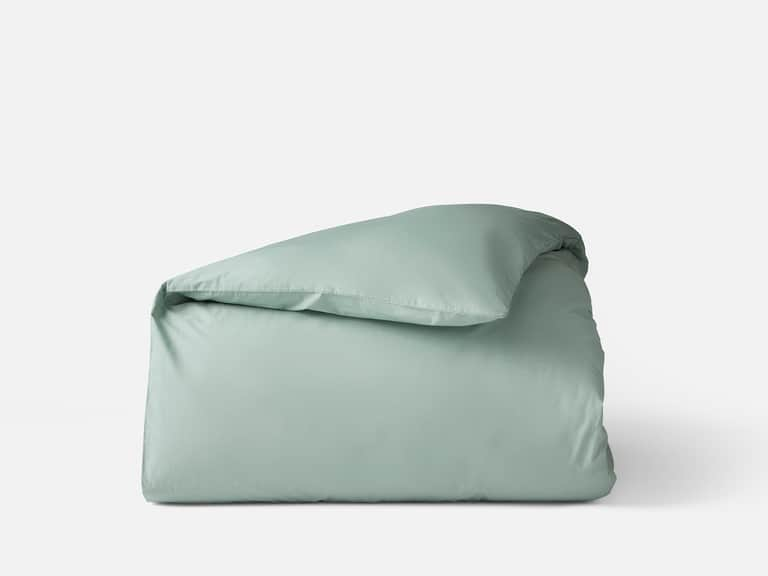
Naturepedic’s duvet cover collection offers three recognizable expressions of organic cotton. Percale is woven in a simple, balanced over-under pattern. Sateen uses a structure that brings more yarn to the surface, creating a smoother hand and subtle sheen. Waffle is defined by raised squares and recessed channels that give the fabric a three-dimensional texture. Each changes the bed in a different way.
Percale: crisp, airy, and quietly structured
Percale has the clean, cool feel many people associate with a freshly made bed. Its plain one-over-one-under weave gives the fabric a matte surface and a relatively light, crisp hand. It does not cling or shine; instead, it lies with a little structure, creating a relaxed, tailored look that suits simple bedding and layered rooms alike.
Because the weave is breathable, percale is often a comfortable direction for people who sleep warm or prefer a less enveloping cover. Air can move through the cloth, while the cotton itself remains soft against the body. A duvet insert still plays a major role in overall warmth, so a breathable cover cannot compensate for an insert that is too heavy for the room or sleeper. But it can help the surface feel less dense.
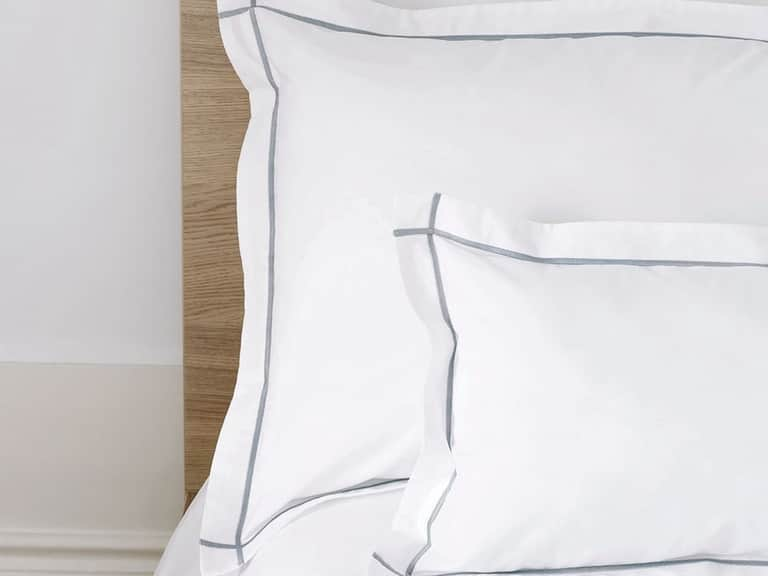
The Naturepedic Organic Cotton Percale Duvet Cover and Sham Set is made with GOTS-certified organic cotton and a 300 thread count. Its description notes a crisp, breathable feel, a matte finish, and corner ties to help keep a comforter insert in place. Sizes include Twin/TwinXL, Full/Queen, and King/California King. Check the current size and included-piece details before ordering, since set configurations can differ.
Percale typically softens with repeated laundering, while retaining its characteristic crispness. That gradual change can be part of its appeal: the cover feels fresh at first and becomes more relaxed over time. Naturepedic’s listed care guidance is machine wash warm, tumble dry low, warm iron if desired, and no bleach. Following the label matters more than relying on generic rules, especially when a duvet cover has specific finishing or construction details.
One small domestic ritual helps preserve the fabric’s feel: remove the cover from the dryer promptly, before wrinkles settle deeply. If you prefer a naturally relaxed bed, ironing may not be necessary. The point is not to make the textile look untouched, but to care for it in a way that fits everyday life.
Sateen: smooth, softly lustrous, and fluid
Sateen is cotton, not satin. The name describes a weave structure in which longer floats of yarn create a smoother surface and a gentle sheen. Against the skin, sateen often feels silkier and more fluid than percale. It drapes with less of the crisp, paper-like structure associated with a plain weave, making the bed feel softly gathered and inviting.
That smoothness can be appealing to sleepers who like a gentle, enveloping surface. Sateen may also feel warmer than percale to some people because its denser surface and drape can feel less airy. This is a matter of sensation, not a guarantee of a particular sleeping temperature: room climate, duvet filling, pajamas, and personal comfort all contribute. If you tend to overheat, consider the whole bedding system rather than judging by weave alone.
The Naturepedic Organic Cotton Sateen Duvet Cover uses long-staple, GOTS-certified organic cotton in a 400 thread count fabric. It is described as silky-soft, subtly lustrous, breathable, and moisture-wicking, with corner ties to help secure an insert. The listed care instructions are machine wash warm, tumble dry low, warm iron, and no bleach. These details make it worth checking the care label before laundering, particularly if you are accustomed to washing all cotton bedding the same way.
Long-staple cotton fibers are longer than short-staple fibers, and that can contribute to a smoother, stronger yarn. But no single specification guarantees that a fabric will suit everyone. Some sleepers love sateen’s polished hand; others prefer the dry, crisp touch of percale. If you already enjoy smooth cotton pillowcases or shirts, sateen may feel familiar. If you reach for lightweight, matte fabrics, percale could be a more natural fit.
Sateen’s subtle sheen also affects the visual character of a room. It catches light differently from percale, bringing a soft glow to a bed without the mirror-like shine of synthetic satin. In a calm bedroom, the effect can add depth to a neutral palette. The fabric itself need not be treated as a decorative statement, but its finish can influence how the whole bed reads.
Waffle: raised texture and a more dimensional surface
A waffle weave is easy to recognize. Its grid of raised squares and recessed channels creates a fabric that feels gently tactile rather than flat. The relief gives the cover visual depth, and the texture can make a bed feel more relaxed and layered, even when the color is simple.
The Naturepedic Organic Cotton Waffle Duvet Cover pairs a GOTS-certified organic cotton waffle weave on the top side with a smooth percale underside. The product description highlights airflow through the textured weave, pre-washing for softness, and a construction intended for repeated laundering. Available sizes are Twin/TwinXL, Full/Queen, and King/CalKing. Having two different surfaces in one cover is a useful detail: the tactile top adds texture, while the percale underside offers a smoother layer next to the insert and bedding.
Waffle’s texture can make it seem more substantial than a flat weave, though the actual warmth of a duvet depends on the full construction and what is inside it. Think of the weave as one part of a layered climate. A light insert, breathable sheets, room temperature, and personal preference all work together. If your bedroom changes significantly between seasons, an adaptable insert and a removable cover are often more useful than expecting one fabric to solve every temperature question.
Texture also influences tidiness. A waffle surface naturally has dimensional variation, so minor creasing may blend into the fabric’s character more readily than on a smooth, closely finished surface. That does not remove the need for care, but it can make the bed feel easygoing rather than formally pressed. For a room designed around calm and practical upkeep, that distinction may matter as much as softness.
Follow the manufacturer’s laundering directions for this cover. The product details emphasize that it is pre-washed and designed to maintain its texture and integrity through repeated washing, but fabric care should still be guided by the label supplied with the item. Avoid adding bleach or harsh treatments unless the care instructions specifically allow them.
A practical comparison
These three textures can be understood as different answers to the same question: how do you want the bed to feel at the end of the day? The distinctions are useful, but they are not rigid rules. A warm sleeper may still enjoy sateen; someone who likes a crisp surface may choose waffle for its visual texture. Personal comfort is the final measure.
- Percale: crisp, matte, and breathable in feel; a good place to start if you prefer a cool, lightweight surface.
- Sateen: smooth, gently lustrous, and fluid; consider it if you like a softer drape and a polished hand.
- Waffle: textured and dimensional; a fit for people who want tactile interest and a relaxed, layered look.
These descriptions are guides, not temperature guarantees. Cotton’s performance depends on the fabric’s weight and finish, and the cover works alongside the duvet insert rather than in isolation. A thick winter insert under a breathable percale cover may still feel warm; a lightweight insert under sateen may be comfortable in a room where the temperature is controlled.
Fit, ties, and the small mechanics of a well-made bed
A duvet cover should fit its insert closely enough to avoid excessive bunching, while leaving room for the insert to loft. Check the dimensions of both pieces before choosing a size. Twin and TwinXL, Full and Queen, or King and California King may be grouped together in a product listing, but dimensions and sizing conventions can vary. Measuring the insert is more reliable than assuming that every label corresponds to the same cut.
Corner ties are practical because they help secure the insert inside the cover. Without them, a duvet may drift toward one end or gather in a corner during the night. To use ties, turn the cover inside out, locate its interior attachment points, and fasten the insert’s corners before turning the cover right side out. Give the duvet a gentle shake to distribute the fill, then smooth the surface. The ties do not remove the need to straighten the bed occasionally, but they can reduce shifting.
Naturepedic’s percale and sateen descriptions specify corner ties, while the waffle cover’s listed product details emphasize its two-sided weave. Confirm the exact construction and included components on the current product page, particularly if an attachment feature is important to you. Small details like closure style, ties, and the number of pieces included can have an outsized effect on daily use.
Care that supports a longer life
Regular washing keeps a duvet cover fresh, but more frequent or aggressive laundering is not automatically better. Follow the care instructions for the specific fabric, use an appropriate load size, and avoid overfilling the washer. A crowded drum can prevent the cover from rinsing evenly and may cause it to twist around other laundry.
Before washing, close the buttons or fastenings and turn the cover inside out if the care label recommends it. Separate it from items with zippers, hooks, or rough edges that could snag the fabric. Use a mild detergent and the stated water temperature. For the Naturepedic percale and sateen covers, the provided directions call for warm-water machine washing and low tumble drying; the waffle cover has its own care guidance. When labels differ, follow the instructions for the cover in your hands rather than applying one routine to every textile.
Drying on low heat and removing the cover promptly can help manage creases and unnecessary wear. Make sure the fabric is fully dry before storing it or putting it back on the bed. Residual dampness trapped in folds can leave an unpleasant odor and is best avoided. If air-drying, spread the cover so that air can circulate instead of leaving it bunched over a narrow line.
Organic cotton certification describes the production standards associated with the textile; it does not mean the finished fabric needs special or complicated household treatment. Gentle, consistent care is usually more useful than elaborate routines. A duvet cover protects the insert from everyday contact, and replacing or washing it is simpler than cleaning the entire comforter frequently.
Choose for the way you live, not only the way a fabric looks
Picture the bedroom at the end of an ordinary day, not just as a carefully arranged bed. A cover will be handled, washed, pulled into place, and slept beneath. The best choice is the one that feels good in that repeated, practical setting.
Choose percale if crispness and a breathable, matte surface sound appealing. Choose sateen if you value a smooth hand and gentle sheen. Choose waffle if the feel of texture and a more relaxed visual finish matter most. If you are uncertain, start with the sensation you already like in everyday cotton clothing or sheets, and compare it with the weave descriptions. A familiar preference is often a useful compass.
Then consider the details that shape maintenance: wash temperature, drying method, size, closure, and ties. Matching those requirements to your household routine makes it more likely that the cover will remain in regular use. A thoughtfully chosen duvet cover can make the bed more comfortable without adding complexity—one small textile decision that helps turn a bedroom into a calmer, more dependable place to rest.